Proven in Practice:
Work That Holds Up in Real Systems
This work didn’t start with a generic business plan.
It started inside chaotic public systems—working alongside real families, youth, and real consequences by demanding tangible answers over compliance.
For over three decades, I operated at the intersection of vulnerable families, youth, providers, and public systems. As CEO of the Family & Youth Roundtable of San Diego County, I led an independent, family- and youth-driven engine partnering with public entities to cut structural friction and demand system effectiveness. Our reputation for rejecting bureaucratic fluff led to national training and transformation work in Sacramento, Massachusetts, Mississippi, Puerto Rico, and SAMHSA-connected initiatives, earning national recognition for our peer support certification model.
What Trench-Level Systems Work Actually Looks Like:
- Dismantling Administrative Bureaucracy: Translating mandates into practical tools for everyday people.
- True Community Architecture: Facilitating focus groups across diverse populations to uncover hard truths.
- Disruptive Provider Training: Delivering realistic programs to shock workers out of compliance fatigue.
- Forced System Transformation: Driving policy alongside Child Welfare, Behavioral Health, and Juvenile Probation so youth have a direct say.
The Raw Truth We Discovered
When we brought together over 70 youth, parents, and community members across multiple neighborhoods to map out why the system was failing them, the feedback was completely uniform:
People were afraid of the system, crushed by the stigma of asking for help, and completely locked out by rigid, cold bureaucratic barriers.
Years ago, I launched one of the first regional conferences specifically forcing people to talk about that stigma and the massive disparities in youth care. Back then, the state funding was sitting there, but leadership was too uncomfortable to even start the conversation. I chose to force it anyway.
The Bottom Line
Systems fail because rigid administrative structures isolate themselves from lived human experiences.
This realization drove me to build LUV Solutions to help teams cut the noise and build with intention
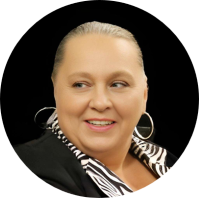
Donna Ewing Marto
Founder, LUV Solutions
Work that holds up in real systems.